 The Division of Ancient Greek Language and Literature has admitted undergraduate students since 1998 and is one of the longest-established and most productive academic units of its kind in Turkey. The division approaches the ancient Greek language and the literary, historical, philosophical, and epigraphic heritage it carries both through a systematic foundation in grammar and textual reading and through contemporary scholarly methods.
The division's core focus encompasses written sources in Greek produced across a broad chronological range from Homer to the Byzantine period. These sources are not limited to literary texts: inscriptions, papyri, coins, and other primary documents form an integral part of both teaching and research. Students are trained to read and interpret these texts with deep competence in ancient Greek, and to analyse the historical and cultural contexts of Anatolia and the wider Mediterranean world.
 MIssIon
The division's primary mission is to train researchers and specialists equipped with the linguistic, philological, and historical expertise needed to engage with ancient Greek sources within the cultural context of Anatolia and the broader Mediterranean world. To this end, the division exposes students to a wide range of primary materials, encompassing not only literary texts but also inscriptions, papyri, coins, and other documentary evidence.
Conscious of being situated at one of Turkey's universities closest to the ancient Greek cultural heritage of Anatolia, the division regards fieldwork as an inseparable component of academic training. Through the surface surveys, museum studies, and epigraphic projects actively conducted by its academic staff, the division aims to be a centre that contributes to the international scholarly community, produces original knowledge, and communicates that knowledge both to the world of scholarship and to the wider public.
The division's most distinctive feature is the integration of Classical Philology training with the discipline of epigraphy. This approach equips students not only with the ability to read texts but also with the practical skills of identifying, documenting, and interpreting inscriptions in field conditions. The researchers thus trained begin their academic careers not merely through library and archival work but through active fieldwork in Turkey's rich archaeological landscape.
|
EpIgraphy of AsIa MInor
The identification, publication, and historical interpretation of Greek and Latin inscriptions in Bithynia, Paphlagonia, Galatia, Pontus, Lycia, and Pamphylia. Regional epigraphic traditions and their relationship with Roman administrative structures. |
HIstorIcal Geography and Road Surveys
The reconstruction of ancient road networks, urban territories, and inter-regional boundaries in Lycia and Pamphylia using epigraphic and archaeological evidence. Historical geography of the Octapolis region. |
|
RelIgIous HIstory and VotIve Cults of Anatolia
Local deity cults and votive traditions in Phrygia, Bithynia, and south-western Anatolia. Analysis of epigraphic documents relating to Zeus Bronton, Kakasbos, and other indigenous deities. |
Urban HIstory and SocIal Structure
Examination of ancient Greek and Roman civic institutions through epigraphic evidence. Public life, honorific practices, and funerary customs in Phaselis, Tlos, Patara, and other cities of Lycia and Pamphylia. |
|
Museum EpIgraphy and DIgItal Methods
The identification and publication of unpublished inscriptions in museum collections. Application of digital documentation technologies such as RTI (Reflectance Transformation Imaging) to epigraphic research. |
The LycIan League and PolItIcal HIstory
The institutional structure of the Lycian League in the Hellenistic and Roman periods, the office of the Lyciarch, and the roles of individual cities within the confederation. Historical interpretation of the Stadiasmus Patarensis and road monuments. |
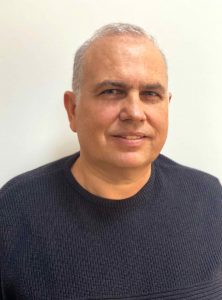 |
Prof. Dr. Mustafa ADAK Head of Division +90 242 310 61 83 madak@akdeniz.edu.tr |
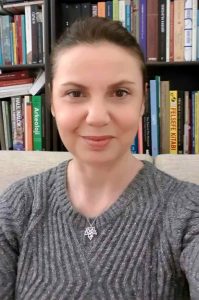 |
Prof. Dr. N. Eda AKYÜREK ŞAHİN +90 242 310 61 84 edasahin@akdeniz.edu.tr |
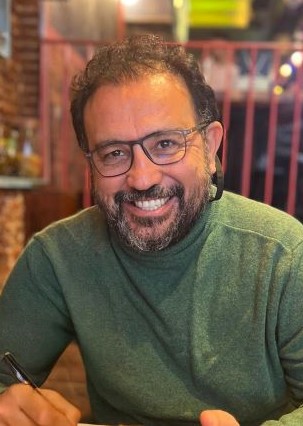 |
Prof. Dr. Fatih ONUR +90 242 310 61 97 fatihonur@akdeniz.edu.tr |
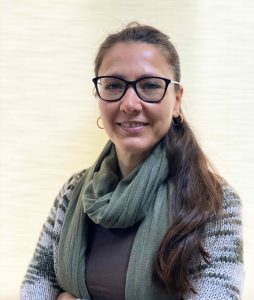 |
Prof. Dr. Nihal TÜNER ÖNEN +90 242 310 61 35 nihaltuner@akdeniz.edu.tr |
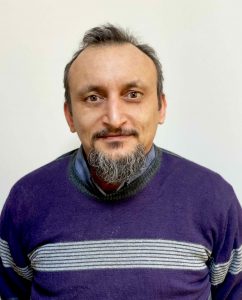 |
Assoc. Prof. Dr. Burak TAKMER +90 242 310 61 87 buraktakmer@akdeniz.edu.tr |
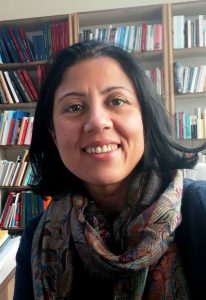 |
Assoc. Prof. Dr. Nuray GÖKALP ÖZDİL +90 242 310 61 36 gokalp@akdeniz.edu.tr |
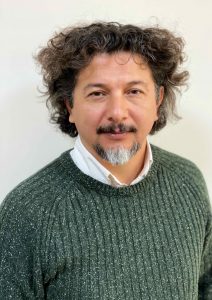 |
Assoc. Prof. Dr. M. Ertan YILDIZ +90 242 227 44 00 (Ext.: 3322) ertanyildiz@akdeniz.edu.tr |
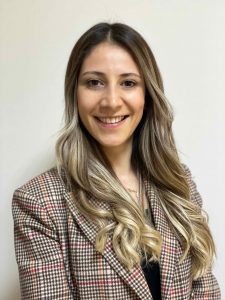 |
Res. Asst. Dr. Fatma AVCU +90 242 227 44 00 (Ext.: 3247) fatmaavcu@akdeniz.edu.tr |
Son güncelleme : 28.04.2026 00:47:15